 by Joe Fix It

Ask anyone who has moved to Las Vegas from almost anywhere else, and they will tell you the water feels different. Soap doesn’t lather the way it used to. Glasses come out of the dishwasher wearing a white film. Shower doors need scraping, not wiping. None of that is your imagination — it’s chemistry.
Why Valley water is so hard
About 90 percent of Southern Nevada’s water comes from Lake Mead, fed by the Colorado River. On its way here the river runs through mineral-rich rock, dissolving calcium and magnesium as it goes. By the time it reaches your tap, Las Vegas water typically measures around 16 grains per gallon — and “very hard” officially begins at just 10.5. Industry estimates say roughly 85 percent of American homes have some degree of hard water; Las Vegas sits at the extreme end of that group.
The water is treated and perfectly safe to drink. But safe and gentle are two different things, and hardness minerals do not just disappear once the water is inside your home.
Where the minerals actually go
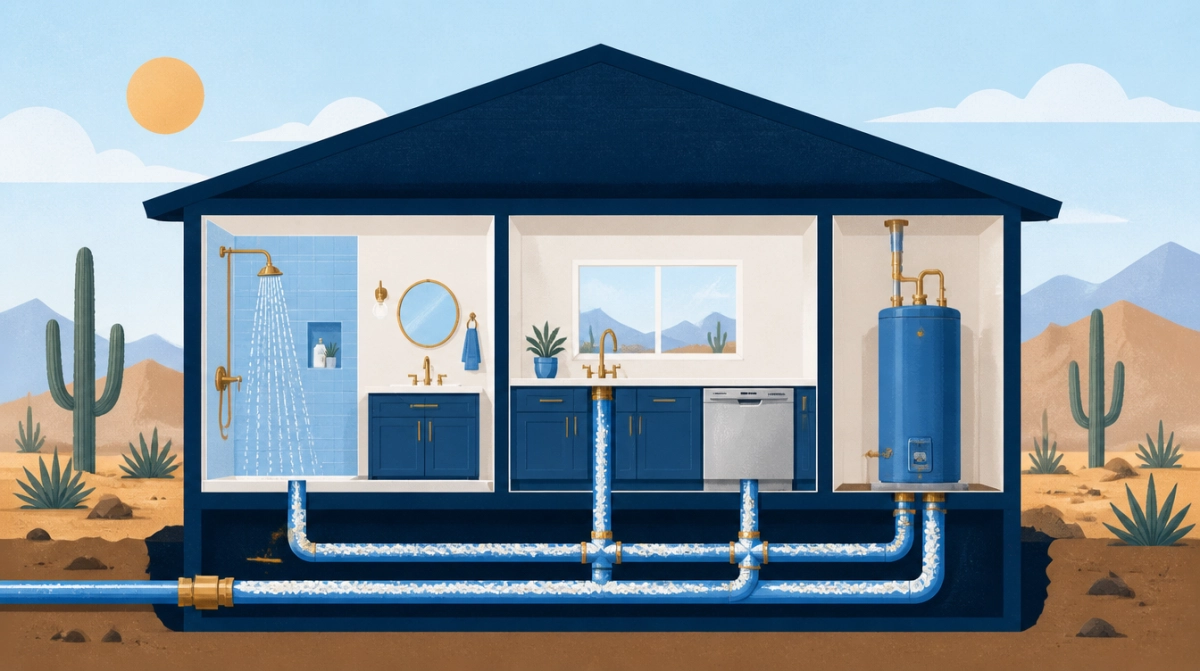
Every gallon of hard water leaves a little of its mineral load behind. Multiply that by the hundreds of gallons a household uses each day, and the deposits add up fast:
- Water heaters take the worst of it. Scale settles on heating elements and tank bottoms, forcing the unit to work harder and fail years earlier.
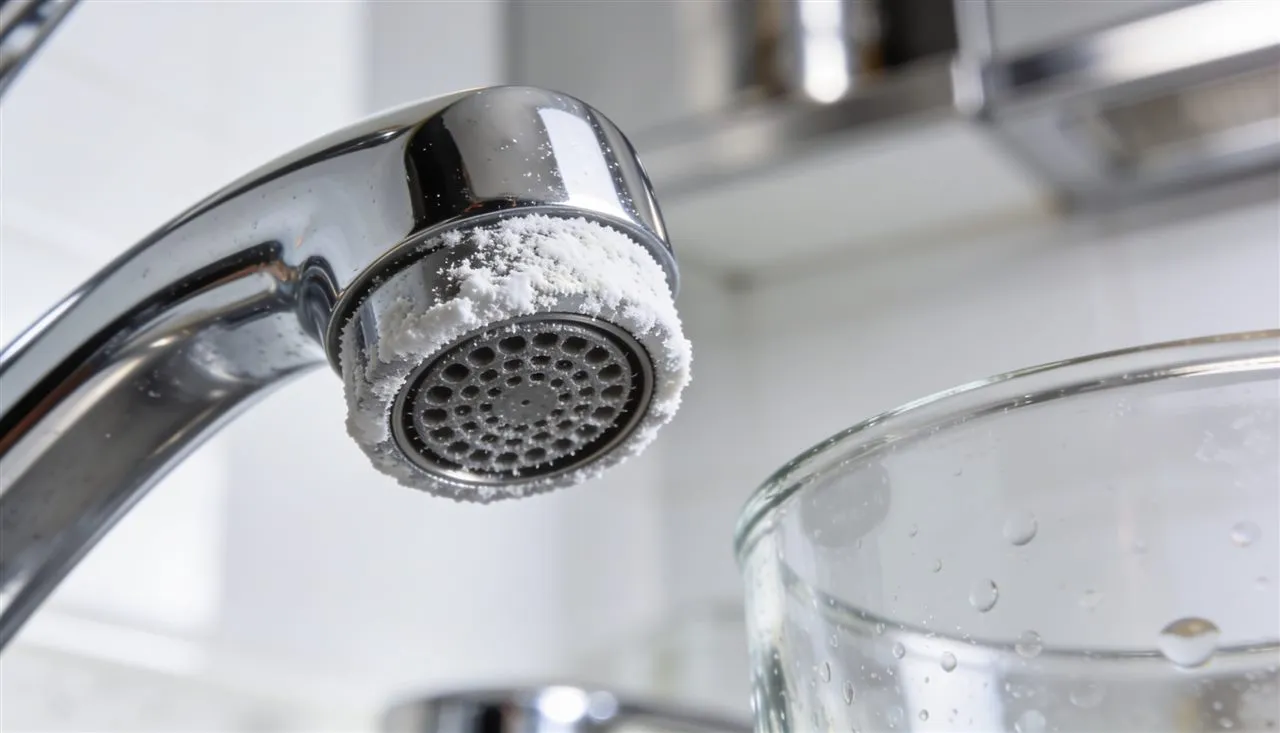
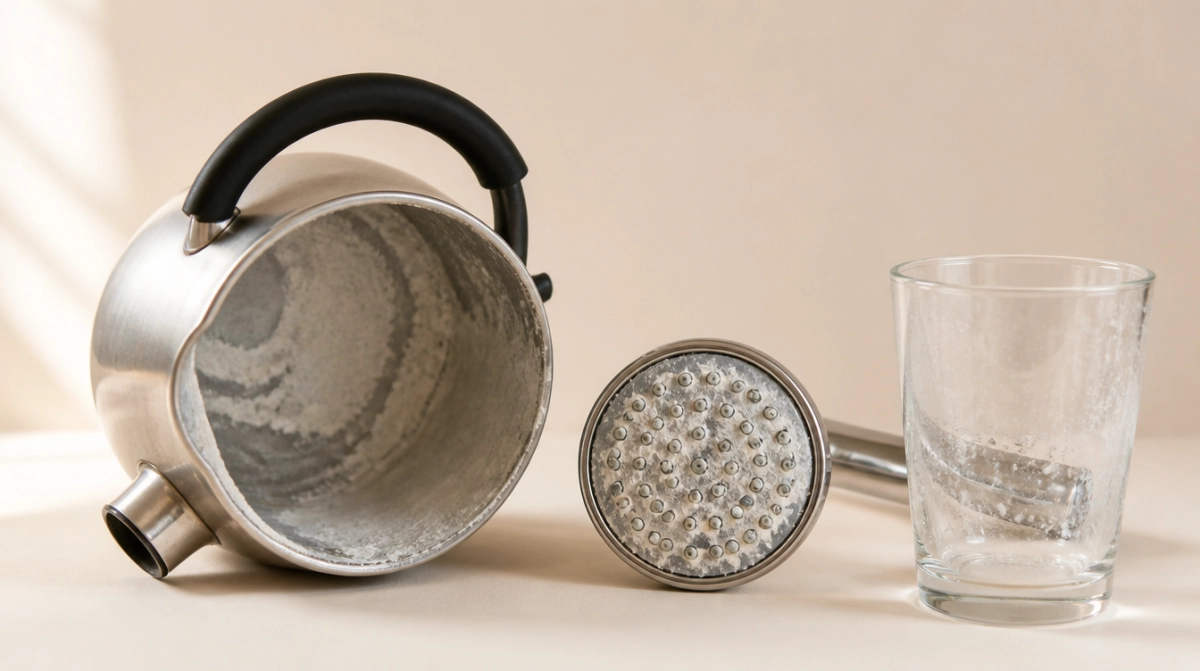
- Fixtures and shower doors collect the crusty white buildup you spend weekends scrubbing.
- Dishwashers and washing machines lose efficiency as scale coats valves and lines — and clothes washed in hard water wear out noticeably faster.
- Skin and hair hold onto soap residue that hard water can’t fully rinse, which is why so many people here fight dryness year-round.
The real cost
Industry studies put the cost of hard water at hundreds of dollars per year for a typical household — in extra energy, early appliance replacement, cleaning products and plumbing repairs. In a market as hard as Las Vegas, the number lands on the high end.
What you can do about it
The fix is straightforward: treat the water where it enters the house. A properly sized whole-home softener removes hardness minerals before they reach your plumbing, and it starts paying for itself the day it’s installed. If you’d like to know exactly how hard your water is, we’ll measure it for free — just numbers you can see for yourself.