 by Joe Fix It

Reverse osmosis delivers real value for Las Vegas homes, cutting through the Valley's mineral-heavy tap water to give you clean, better-tasting drinking water at the kitchen sink. We install and maintain these systems locally, pairing them with whole-home softeners so the rest of the house is protected too. Families cut their bottled-water habit while gaining cleaner water straight from the tap.
Key Takeaways
- Las Vegas' hard water leaves mineral buildup on dishes, faucets and fixtures and dulls the taste of drinking water.
- Reverse osmosis pushes water through a membrane that removes dissolved solids, delivering clean water for drinking and cooking.
- RO handles the kitchen tap; a softener protects the whole house. Most Valley homes run both.
- RO filters and the membrane need replacing on a schedule to keep performance up in high-mineral water.
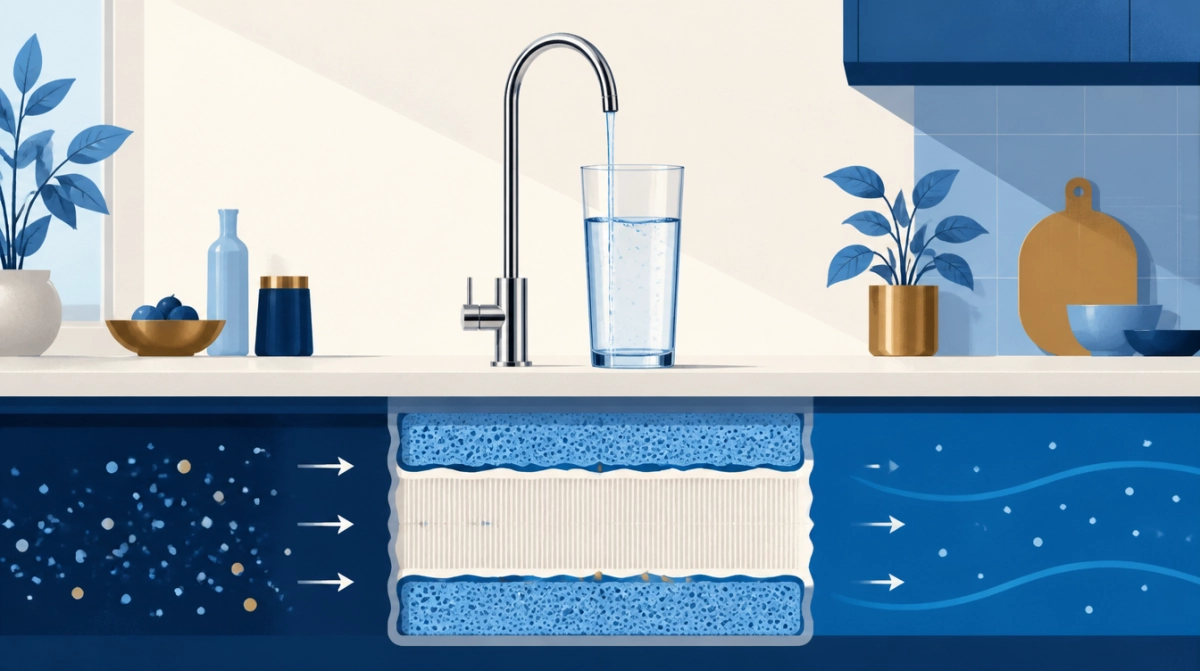
Why Does Las Vegas Water Need Extra Filtration?
Lake Mead supplies roughly 90 percent of the water flowing into Las Vegas homes and businesses, arriving by way of the Colorado River. That single source carries heavy loads of magnesium and calcium, the minerals responsible for hard water. Every glass, shower, and load of laundry in the Valley starts with this same mineral-rich supply.
Hardness at that scale does more than leave spots on glassware. Scale builds up inside pipes, water heaters, and coffee makers. It dulls the taste of drinking water long before residents notice anything wrong. Bottled water becomes the workaround, and the monthly cost quietly climbs.
Does every Las Vegas home have this problem?
Yes. Because nearly all Valley water traces back to the same Colorado River source, hardness isn't a neighborhood issue or a plumbing defect. It's a regional characteristic tied directly to where the water originates.
We're based in Las Vegas and deal with this exact water supply every day, not water from some other city with a different mineral profile. That local footing shapes how we recommend reverse osmosis for real homes, not generic setups built for softer municipal water elsewhere.
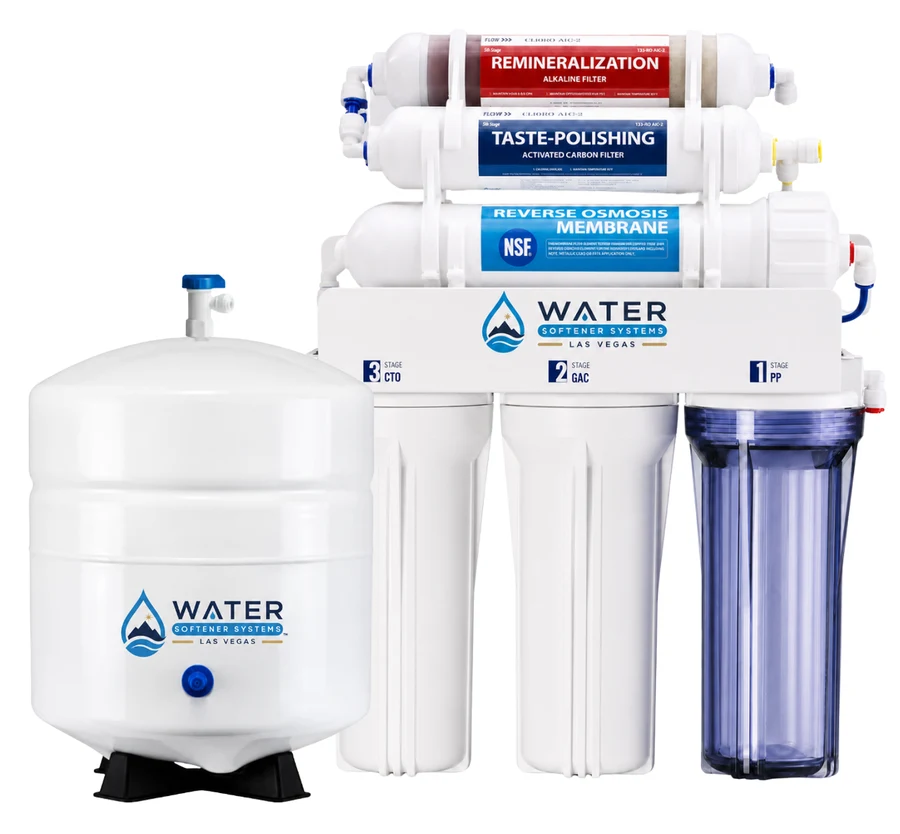
What Does a Reverse Osmosis System Actually Do?
A reverse osmosis system cleans water by forcing it through a semi-permeable membrane. The membrane traps dissolved solids, minerals and other impurities while letting clean water flow to a dedicated faucet at the sink. The process is mechanical, not chemical, and it is what fixes the flat, mineral taste tied to the Valley's water supply.
How is reverse osmosis different from a water softener?
A softener swaps hardness minerals for sodium ions and mainly protects pipes and appliances throughout the house. Reverse osmosis targets drinking water quality directly at one tap, removing a broader range of dissolved contaminants. Many Las Vegas households run both systems together: softening for the home, RO for the glass.
Our services go beyond the softener tank itself:
- Reverse osmosis and filtration system installation
- Free water testing before any recommendation
- Straight answers and up-front quotes, no guesswork
A properly sized RO system depends on matching equipment to your household's actual water test results and daily drinking-water use.
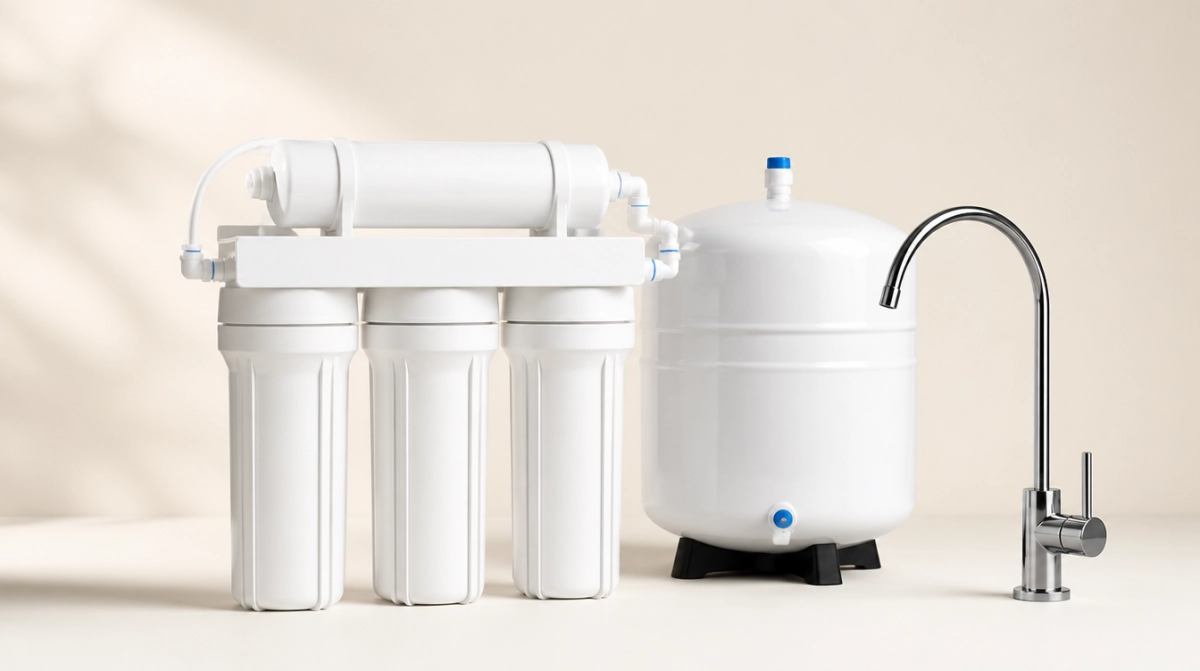
Is Reverse Osmosis Worth the Cost Here?
Value comes down to comparing a one-time investment plus periodic filter changes against an endless stream of bottled water purchases. Reverse osmosis pays for itself because it replaces that ongoing grocery-store expense with water produced at home. Families who stack cases of bottled water into their carts week after week are paying for something a properly sized system delivers on tap.
We built our reputation on straight answers instead of upsells. Every recommendation we make starts with honest service, not a sales script designed to push the biggest unit available.
Does reverse osmosis actually save money over bottled water?
For most households, yes. Once installed, RO water flows straight from the tap, eliminating the recurring cost of bottled cases. The up-front investment shifts spending from an endless monthly expense to a one-time system with a modest annual filter cost.
How do we decide what size system a home needs?
We look at how many people drink and cook with the water, whether you want a line run to the fridge or ice maker, and what your water test shows. That assessment lets us tailor the system instead of defaulting to a one-size-fits-all package.
Under-Sink RO or Whole-Home Treatment: Which Fits Your Home?
Two setups cover most households: a compact reverse osmosis unit under the kitchen sink, or a full treatment train that softens and filters water at every fixture with RO added at the sink. Neither option is universally "better." The right fit depends on the property and the habits of the people living in it.
What's the difference?
An under-sink RO unit, sometimes called a point-of-use system, purifies water at a single tap, usually the kitchen faucet, and often the refrigerator line. Whole-home softening and filtration treats water before it reaches every fixture in the house, including showers, laundry, and bathroom sinks, but does not remove dissolved solids the way RO does. The choice comes down to whether the goal is better drinking water, better water throughout the property, or both.
Which setup makes sense for my house?
Housing across the Valley varies widely, from mid-century ranch homes to high-rise condos with limited plumbing access. That range affects which configuration fits.
- Condos and smaller units: an under-sink RO unit often solves the taste and drinking-water problem without a large installation footprint.
- Single-family homes: a whole-home softener plus RO at the sink addresses scale across every fixture and drinking water at the tap.
- Larger households: add a line to the fridge and ice maker so every cold drink comes from the RO system.
We walk through the layout of a home before recommending either path. We'd rather size the system correctly than sell more equipment than a household needs.
How Do You Get Started With Reverse Osmosis?
A free water test starts the process. We measure hardness and total dissolved solids right at the tap and identify exactly what the water needs treated for before recommending anything. No guesswork, no upsell, just a clear picture of what's actually coming out of the faucet.
What happens after the water test?
Once we know the hardness level and mineral content, we walk through the results in plain language so the household understands the "why" behind any recommendation. From there, we outline options for drinking and cooking water.
How do we choose the right system?
We match the equipment to the water test results, not a one-size-fits-all package. Because we install the systems and handle setup ourselves, the unit performs correctly from the first glass. Expert installation matters just as much as the equipment itself.
Getting started comes down to three steps:
- Schedule the free water test.
- Review honest, straightforward findings with our team.
- Select a system sized to the home.
FAQ
Why is reverse osmosis worth it for Las Vegas homes?
Las Vegas water pulls from Lake Mead, which carries heavy magnesium and calcium loads and a flat mineral taste. Reverse osmosis removes dissolved solids at the kitchen tap, giving cleaner, better-tasting water and cutting reliance on bottled water.
Does reverse osmosis replace a water softener?
No. The two work differently: reverse osmosis filters drinking water through a membrane at one tap, while a softener addresses hardness throughout the home. We pair both for full-house protection.
Who installs and maintains reverse osmosis systems in Las Vegas?
Water Softener Systems Las Vegas, based locally, installs and services RO systems across the Valley, including scheduled filter and membrane changes.