 by Joe Fix It
A water softener and a whole-home filter solve two different problems. The softener removes the calcium and magnesium that scale up Las Vegas plumbing and appliances. The filter removes sediment, chlorine taste and other contaminants softening leaves behind. Many Valley homes end up with both, and the cheapest system up front isn't always the cheapest over five years once operating costs, maintenance and appliance longevity are counted.
Key Takeaways
- Softeners target hardness minerals; whole-home filters target sediment, chlorine and other impurities.
- Las Vegas water runs about 16 grains per gallon, so scale protection is the first priority for most homes.
- Neither system replaces the other, and a combined setup is common in the Valley.
- Long-term value depends on operating costs and appliance lifespan, not just the install price.

What Determines Softener and Filtration Costs Here?
Three factors drive the price of treating hard Las Vegas water: household size, the hardness level flowing into the home, and whether the property needs a standalone softener or a combined softening-plus-filtration setup. We base our pricing conversations on the actual water coming out of the tap, not a generic estimate.
Grain hardness matters more than most homeowners expect. A house pulling water at the high end of the Valley's hardness range needs a larger resin tank and more frequent regeneration cycles than a smaller condo. That difference alone can shift a quote considerably.
Why do quotes vary so much between homes?
Quotes vary because no two Las Vegas properties draw the exact same water chemistry or plumbing layout. Square footage, the number of bathrooms, and existing pipe condition all factor into labor and equipment sizing. We see this variation from Summerlin to Henderson to North Las Vegas.
Here's what typically shapes a final quote:
- Household water demand based on occupants and fixture count
- Measured hardness level, not an assumed average
- Filtration needs layered on top of softening, if sediment or chlorine taste is a concern
- Installation access, including existing plumbing and space for equipment
We offer a free water test before any homeowner commits to a system. That test tells us exactly what a property needs, so the quote reflects real conditions instead of a guess.
Water Softener vs. Water Filter: What's Different?
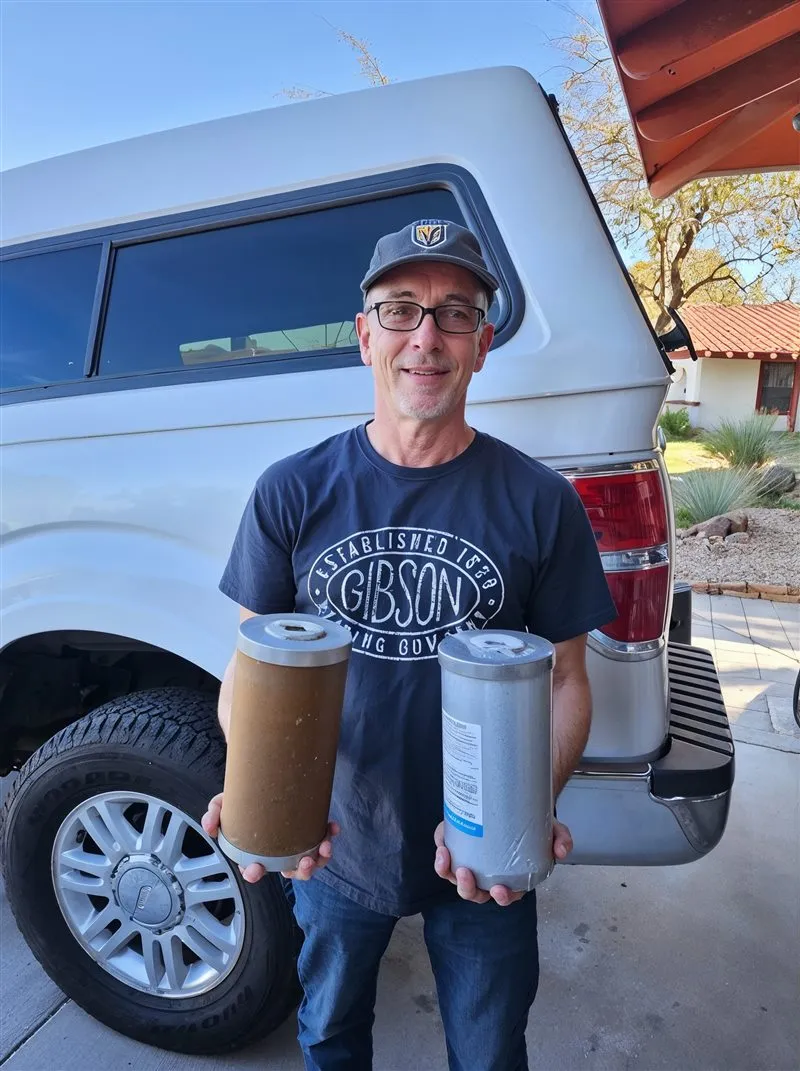
The comparison comes down to one core distinction: minerals versus contaminants. A softener strips calcium and magnesium out of Las Vegas tap water, the exact minerals that cause hard water buildup. A filter targets a different set of problems entirely, reducing sediment, chlorine and other impurities before the water reaches your faucets.
We size every system to match the home it serves, not a one-size-fits-all box. A Las Vegas condo gets a compact unit that fits tight utility closets. A single-family house on a larger lot gets a full treatment train built to handle higher water volume.
Do I need a softener, a filter, or both?
Most Las Vegas households benefit from both, since each system solves a separate problem. A softener protects pipes and appliances from scale. A whole-house filter improves the taste, smell and clarity of the water people drink and bathe in.
| System | Primary job | Best for |
|---|---|---|
| Water softener | Removes calcium and magnesium hardness minerals | Protecting appliances, plumbing, and fixtures from scale |
| Whole-house filter | Reduces sediment, chlorine and other impurities | Improving water taste and quality throughout the home |
| Reverse osmosis (point of use) | Removes dissolved solids at one tap | Drinking and cooking water at the kitchen sink |
Can one system replace the other?
No. A softener will not remove chlorine or sediment. A filter will not stop scale buildup in your water heater. Homeowners who want complete protection typically pair both systems, and add reverse osmosis at the kitchen sink for drinking water.

What Does Installation Actually Involve?
Skimping on the install to save a little money often backfires within a few years through leaks, voided warranties, and equipment that wears out faster than it should.
We install top-rated systems with experienced crews, not bargain parts thrown in by whoever's cheapest that week. Every project gets straight answers up front and honest work on the back end, never a vague estimate that turns into a surprise invoice. That matters most when homeowners are weighing softener against filter. The wrong sizing on either system creates problems that cost more to fix later than to prevent now.
Professional installation covers correct sizing, proper plumbing connections on a garage loop, and a system built to last, not a rushed weekend job.
Does DIY installation save money?
Rarely, once the full picture comes into view. An undersized or oversized DIY softener can double long-term salt and water consumption, quietly eating any up-front savings within a couple of years.
| Installation approach | Trade-off |
|---|---|
| Professional install | Correct sizing, warranty protection, straight answers |
| DIY install | Risk of wrong sizing, higher salt and water costs, voided warranty |
Is Whole-Home Filtration Worth the Investment?
For many Valley homes, yes. Las Vegas water ranks as exceptionally hard, even measured against other desert cities, and that hardness is exactly what drives scale buildup inside water heaters, dishwashers, and pipes. Softening earns back its cost through fewer repairs and longer-lasting appliances. Filtration earns its keep in better-tasting water and cleaner fixtures.
Does home size change what system I need?
Home size and water demand absolutely change equipment sizing. Townhomes and condos get compact units built for tighter mechanical spaces. Larger single-family homes with heavier daily water use receive full treatment trains. We never undersize equipment just to fit a smaller footprint.
Is a water softener the same as a whole-house filter?
No. Softeners target the mineral hardness that scales appliances. A whole-house filter targets sediment, chlorine, and other contaminants. Most Valley homes benefit from both working together.
Which System Wins for Las Vegas Homes?
For the hard-water fight, the softener comes first. A whole-house filter handles what softening cannot touch. Skipping either one leaves a gap, whether that gap shows up as scale damage on pipes or as chlorine taste and sediment passing straight through untreated. Every recommendation we make starts with a free water test, because guessing at hardness levels wastes money on the wrong fix.
| Factor | Water softener | Whole-house filter |
|---|---|---|
| Primary job | Removes hardness minerals | Reduces contaminants, chlorine, sediment |
| Built for Las Vegas water | Yes, addresses the Valley's known hard-water problem | Complements softening, doesn't replace it |
| Our approach | Recommended first, based on test results | Added once testing shows a taste, odor or sediment issue |
Do I need both a softener and a filter?
Most Las Vegas households benefit from pairing the two rather than choosing just one. A softener protects water heaters, faucets, and appliances from scale buildup, while filtration addresses what softening leaves behind. Every system gets sized against actual test results, never a one-size-fits-all package.
FAQ
What's the real difference between a softener and a filter?
A softener removes the calcium and magnesium minerals that cause hard water buildup. A filter reduces sediment, chlorine and other impurities. They solve different problems.
Does a Las Vegas home need both?
Most do. Softening protects plumbing and appliances from 16-grain water; filtration improves taste and clarity. Reverse osmosis at the kitchen sink is the usual add-on for drinking water.
How do I find out what my home needs?
Start with a free in-home water test. We measure hardness, iron and chlorine at your tap and size the recommendation to your home and water use.