 by Joe Fix It
It’s the question we get more than any other during free water tests: “Do I want a traditional water softener or a salt free conditioner?” Both are legitimate technologies — here is a comparison:
How a traditional softener works
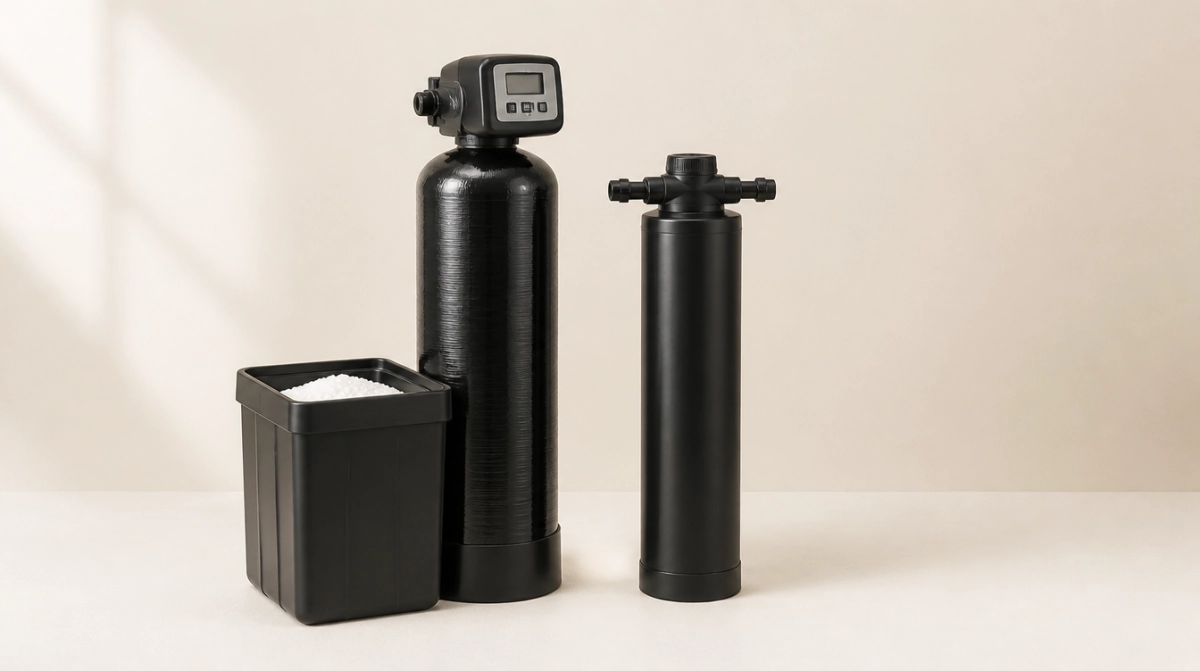
A salt-based softener physically removes calcium and magnesium from your water through ion exchange — hardness minerals swap places with sodium ions as water passes through a resin bed. The result is genuinely soft water: soap lathers richly, skin rinses clean, spotting stops and scale stops accumulating everywhere in the house.
How salt-free conditioning works
A salt-free conditioner doesn’t remove the minerals — it changes them. Template-assisted crystallization (TAC) converts dissolved hardness into microscopic crystals that stay suspended in the water instead of bonding to your pipes and appliances as scale.
The upside is a system with no salt, no drain, no electricity and almost no maintenance. The trade-off: because the minerals are still in the water, it won’t feel like softened water, and spotting on glass can still occur.
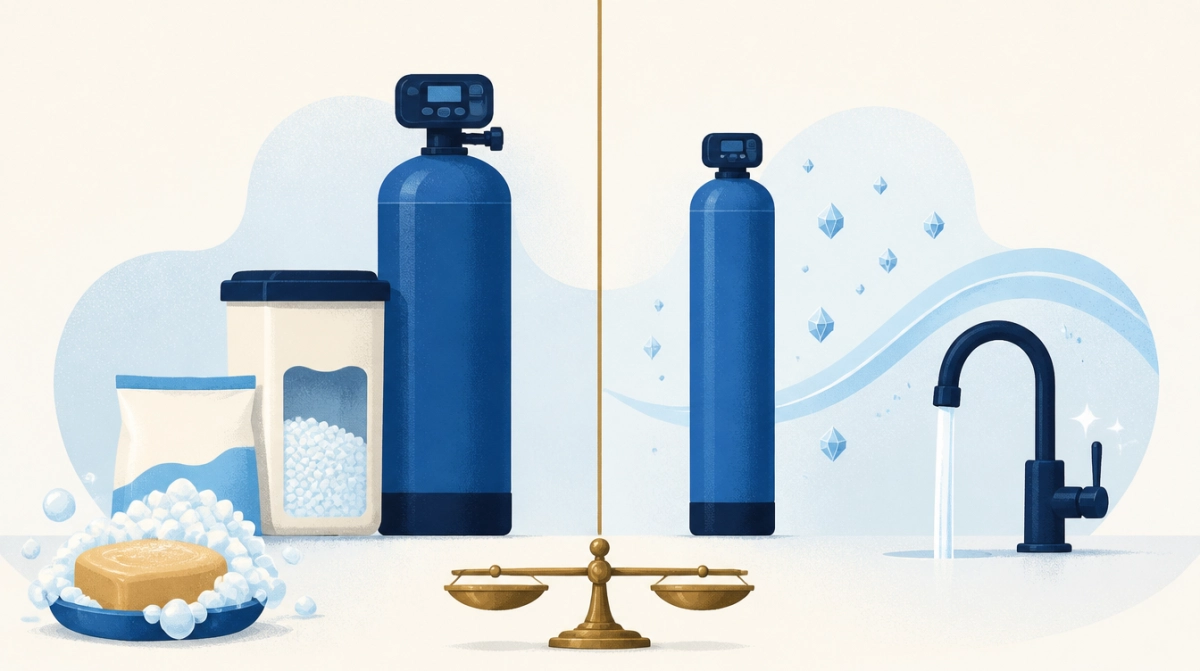
The honest comparison
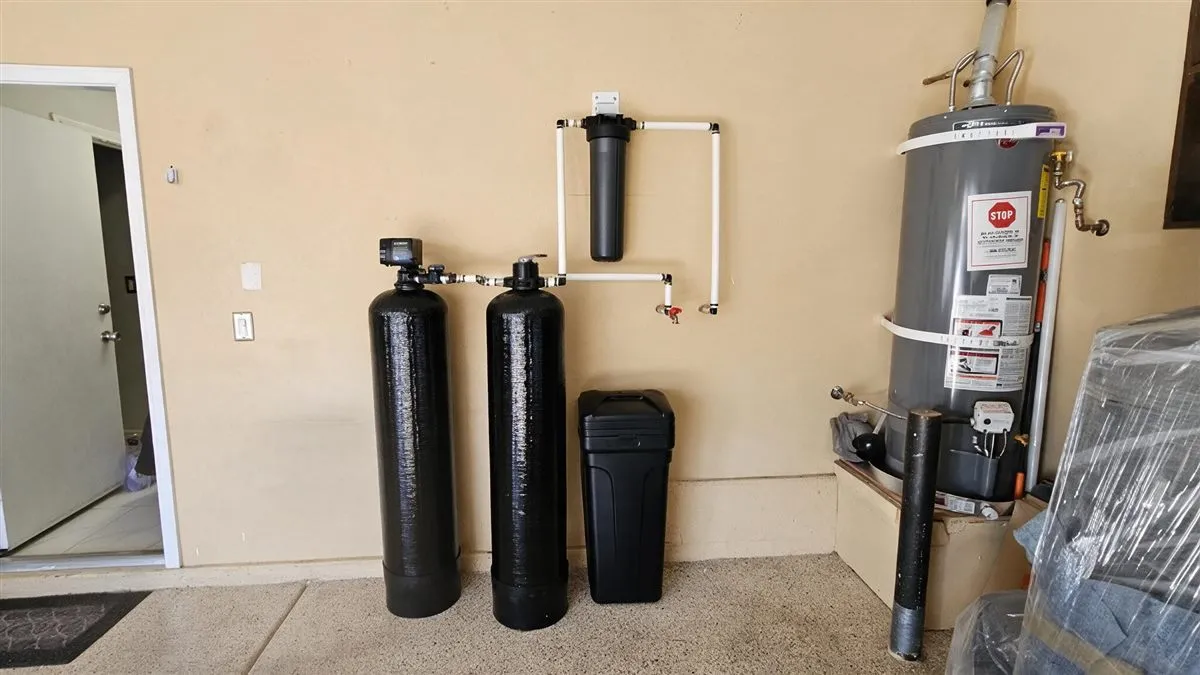
- Choose a salt softener if you want the full soft-water experience — the feel, the lather, the spot-free dishes — and maximum appliance protection.
- Choose salt-free if your priority is scale protection with zero upkeep, your community restricts brine discharge, or you simply never want to haul a salt bag again.