 by Joe Fix It

Of every appliance in a Las Vegas home, the water heater takes the most abuse from hard water. Scale loves heat — the hotter the surface, the faster minerals come out of solution and bond to it. That makes your heater’s tank and elements the number-one target in the house. Here are the five warning signs we see most, in the order they usually appear.
1. Popping, rumbling or crackling sounds
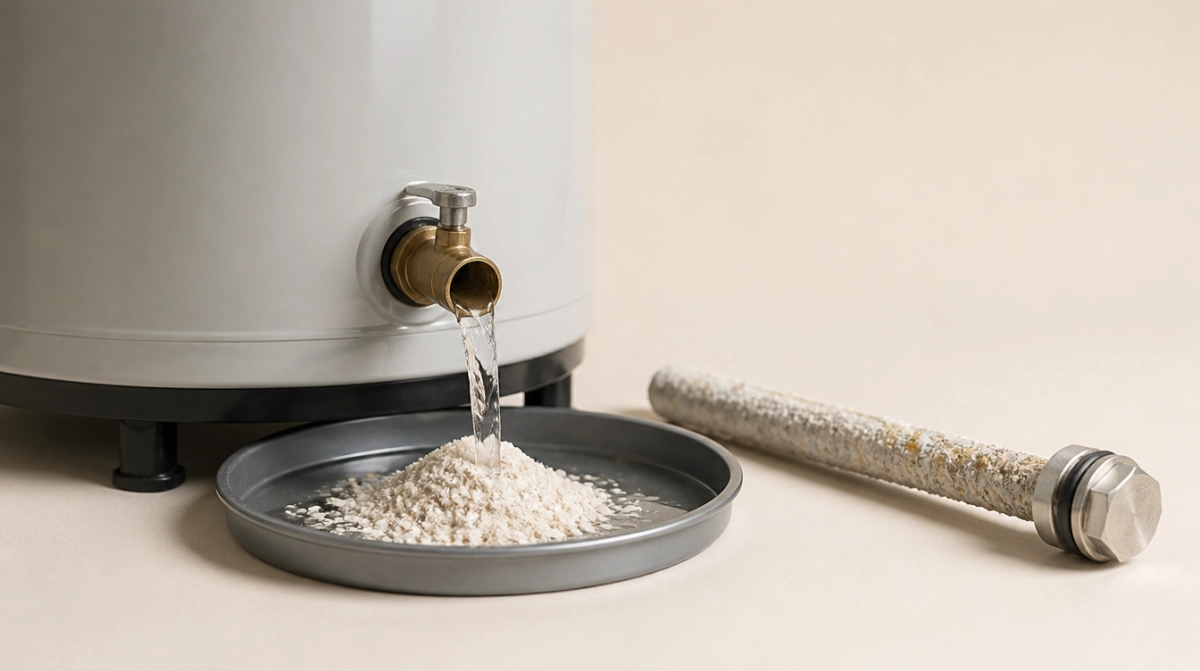
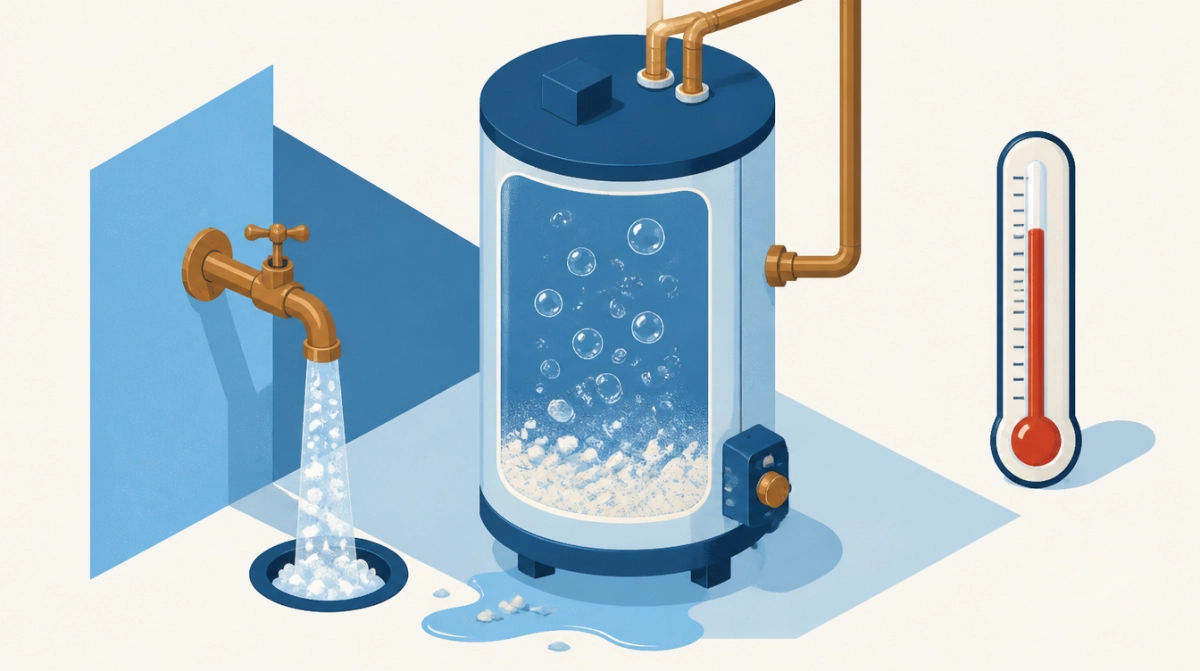
That popping you hear is water boiling up through a layer of scale on the bottom of the tank. The sediment traps water against the burner or element, where it superheats and bursts through the crust. It’s the classic first symptom — and it means scale is already established.
2. Hot water runs out faster than it used to
Scale takes up space and insulates the water from the heat source. A tank with an inch of sediment at the bottom holds less water and heats it more slowly, so showers start turning cold sooner.
3. Rising energy bills
Scale is an excellent insulator — which is terrible news for efficiency. Even a thin layer forces the heater to burn more gas or electricity to hit the same temperature. If your bills creep up without a rate change, your heater is a prime suspect.
4. Cloudy or rusty-tinged hot water
Sediment stirred up in the tank can leave hot water looking cloudy or carrying a metallic tint.
5. Moisture or weeping around the tank
Scale accelerates corrosion and stresses the tank through repeated overheating cycles. Small leaks around fittings or the base are the final warning before failure — and in a garage full of storage, a failed 50-gallon tank is a very bad day.
The fix is upstream
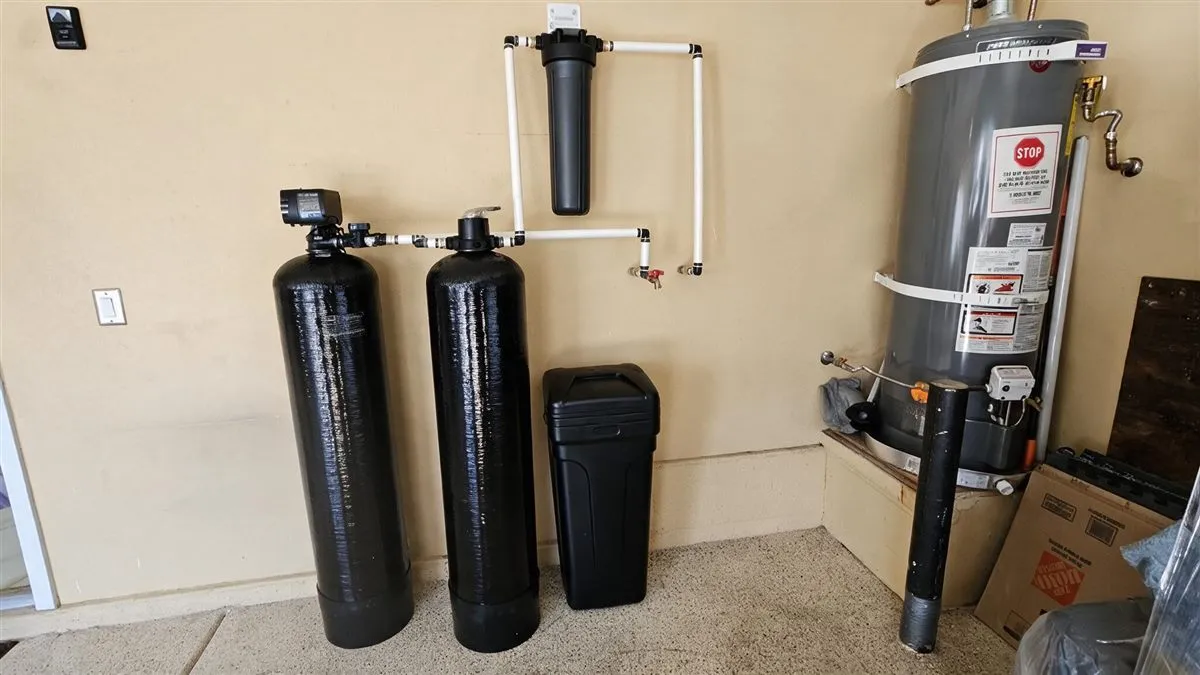
Flushing the tank helps, but it treats the symptom. The permanent fix is stopping scale before it reaches the heater: a whole-home softener protects not just the water heater but every appliance and fixture downstream. If your heater is showing any of the signs above, get your water tested — it’s free, it takes 20 minutes and it tells you exactly what you’re dealing with.